Building Your Baby’s Breastfeeding Village: Support That Starts Before Birth
Breastfeeding is natural, but that doesn’t mean it’s always instinctive. Moreover, many new parents, those first hours and days are a whirlwind of emotions, physical recovery, and learning, often without the safety net of consistent, informed support.
In the UK, just 48% of babies are exclusively breastfed at 6–8 weeks (NHS Digital, 2022), despite the World Health Organization recommending exclusive breastfeeding for the first six months. Behind that statistic are countless women who wanted to breastfeed but faced barriers, from latch challenges and pain to a lack of timely, accurate help.
The truth? Success with breastfeeding isn’t just about determination. It’s about preparation. Because, the families who feel most confident are often those who started building their feeding village well before birth.
Why Preparing Your Support Matters
The NHS shortage of midwives and health visitors means many new mothers see fewer postnatal visits than previous generations. Meaning there are often care gaps in those critical first weeks – gaps that can make or break your feeding journey.
Research shows that mothers who receive professional lactation support in the first week postpartum are 2.4 times more likely to be exclusively breastfeeding at 6 weeks (McFadden et al., Cochrane Review, 2017).
Your feeding village fills those gaps. Ultimately, it’s a mix of people, places, and resources you can call on – without having to Google at 3 a.m. while a newborn cries in your arms.
“It takes a village to raise a child, but it also takes a village to feed one.” – Doula Pippa
Step 1: Understand What a Feeding Village Is
Your village isn’t just your partner and a couple of supportive friends. It’s a network of people and knowledge sources you trust, ready to help you troubleshoot, reassure you, and cheer you on.
Think of it as layers:
- Immediate emotional and practical support — partner, close family, best friend.
- Skilled help — lactation consultant, breastfeeding counsellor, postnatal doula, midwife.
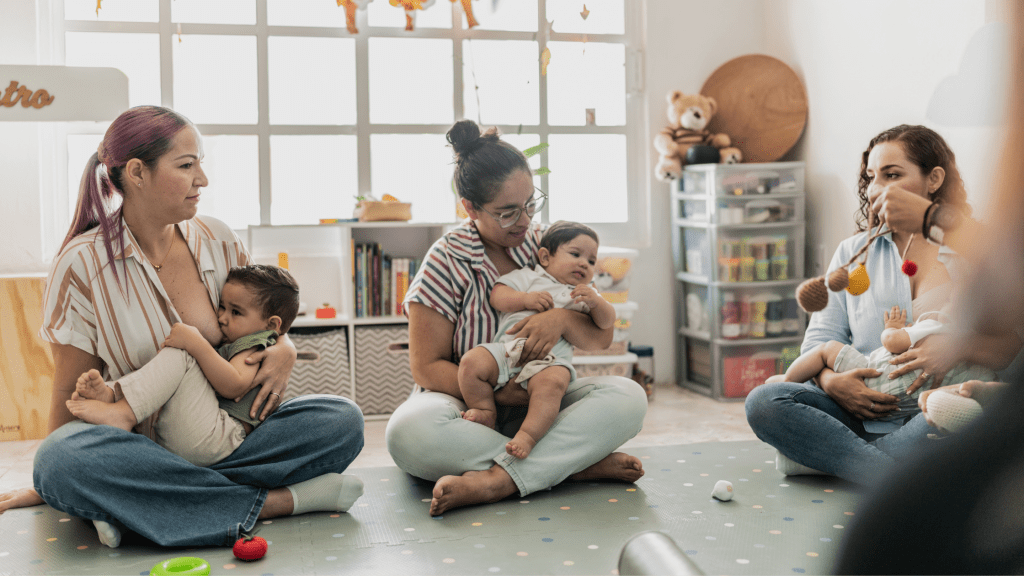
- Community — local breastfeeding groups, peer supporters, online forums with good moderation.
- Trusted information — NHS website, La Leche League GB, Association of Breastfeeding Mothers.
Step 2: Choose Your Core Breastfeeding Professionals
While many parents assume help will be “there” if needed, the reality is different. Many NHS postnatal teams are overstretched, meaning waiting for a referral can take days – precious time in which feeding can break down.
As a result, booking at least one private lactation consultant or breastfeeding counsellor before birth means:
- You know who to call if something feels wrong.
- Avoid the stress of finding help in the middle of a crisis.
- You can arrange proactive check-ins, not just reactive visits.
In a 2021 Public Health England survey, 80% of mothers who stopped breastfeeding early said they would have liked more support.
Step 3: Include Your Partner
Partners can feel unsure of their role in breastfeeding, however, research shows their support has a huge impact.
A study in Birth (2018) found that mothers were 1.8 times more likely to still be breastfeeding at 12 weeks if their partner was actively supportive. That means partners should know:
- How to spot a good latch.
- To bring you water, food, and comfort during feeds.
- How to advocate for uninterrupted skin-to-skin time.
Consider attending an antenatal class together, either through your doula, a local NHS session, or an online course. I offer antenatal breastfeeding sessions which you can view here.

Step 4: Build a Breastfeeding-Friendly Home Environment
Your physical space can make your start easier. So, before baby arrives:
- Set up a feeding station in each main room: water, snacks, burp cloths, nappies, phone charger.
- Choose a comfortable chair with back and arm support.
- Keep night-time lighting dim to protect your baby’s circadian rhythm.
Check out my post on preparing for baby’s arrival here and what to expect in the first 7 days after birth here.
Step 5: Map Out Community Resources
Before birth, find your local:
- Baby cafés / breastfeeding drop-ins (check the NHS and local Facebook groups)
- La Leche League meetings
- Hospital infant feeding team clinic hours and Family Hubs
- Peer supporters in your area
Save all contact numbers in your phone.
Step 6: Anticipate Challenges – and Plan for Them
The most common early hurdles include:
- Latch pain (often fixable with positioning tweaks)
- Engorgement
- Concerns about milk supply
- Sleep deprivation
Therefore, knowing where to get fast help reduces stress and increases your chances of overcoming challenges.
“It’s not about having no problems; it’s about having the right people to help you solve them.” – La Leche League GB
Step 7: The Emotional Side of Breastfeeding Support
Breastfeeding is physical, yes, but also deeply emotional. Hormonal changes, sleep deprivation, and the intensity of newborn care can make you feel vulnerable.
Your feeding village isn’t just there to fix latch issues; they’re there to reassure you that you’re doing a good job, to remind you to eat, and to hold the baby so you can shower.
Step 8: Your Antenatal Breastfeeding Checklist
Before 37 weeks, make sure you:
Finally, save emergency helpline numbers for immediate 24/7 support:
National Breastfeeding Helpline: 0300 100 0212
- First, book a private lactation consultant or breastfeeding counsellor session.
- Then, attend a breastfeeding preparation session.
- After that, add your partner to your plan so they know how to help.
- Next, locate local community support groups you can attend.
- Also, prepare your home feeding spaces for comfort and convenience.
Final Thoughts
Breastfeeding may be natural, but it’s also a learned skill – for both you and your baby. Starting with a village already in place means you’re not starting from scratch when you’re at your most tired and vulnerable.
Breastfeeding matters not only for emotional connection but for lifelong health. Breastmilk contains antibodies that protect your baby from infections, reduces the risk of sudden infant death syndrome (SIDS) by up to 50% (Hauck et al., Paediatrics, 2011), and is linked to lower rates of childhood obesity and asthma. For mothers, breastfeeding is associated with a reduced risk of breast and ovarian cancers, type 2 diabetes, and heart disease. Starting with strong support increases the likelihood you can continue for as long as you choose – giving both you and your baby the full spectrum of these health benefits.
If you’re pregnant now, the best time to start building your village is today.
Ready to create your breastfeeding plan? Book your antenatal prep session with me and start your journey with confidence.